01BUSINESS OPPORTUNITY
Business Overview
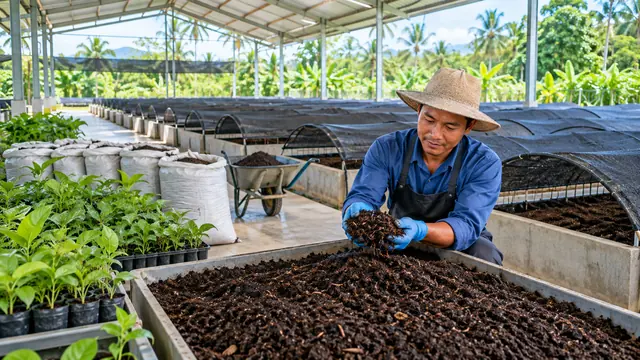
East Nusa Tenggara’s semi-arid agricultural soils suffer from chronic low organic matter and nutrient depletion due to prolonged dry seasons and excessive chemical fertilizer application. At the same time, regional cattle feedlots, abattoirs, and agro-processors generate immense quantities of livestock manure, corn cobs, and organic residues. This enterprise establishes an industrial-scale vermiculture (earthworm composting) facility in KIB utilizing African Nightcrawler (Eudrilus eugeniae) and Red Wiggler (Eisenia foetida) earthworms. The facility produces organic vermicompost castings (Kascing) rich in plant-available humic acids, beneficial microbes, and natural growth hormones, supplying regional horticulture, dragon fruit, and vegetable growers.
Products & Business Formats
- Premium Screened Earthworm Castings (Kascing Vermicompost)
- Fine, dark, odorless organic vermicompost packed with humic acids, beneficial microbes, and balanced macro/micronutrients for horticulture.
- Liquid Vermi-Extract & Earthworm Bio-Stimulant Spray
- Cold-extracted liquid organic fertilizer and biological foliar spray rich in natural plant hormones (auxins, gibberellins) for fruit and vegetable crops.
- Live Commercial Breeder Earthworms (Eisenia foetida & Eudrilus eugeniae)
- Certified live earthworm biomass and starter breeding colonies sold to agricultural cooperatives, community groups, and educational farms.
- Dry Earthworm Meal for High-End Aquaculture & Poultry Feeds
- Oven-dried and pulverized whole earthworm powder (65%–70% crude protein, high lysine content) for premium ornamental fish and shrimp feeds.
Business model
Revenue is based on solid vermicompost sales in 5 kg and 25 kg bags and bulk tonnage, bottled/jerrycan liquid fertiliser sales, live-worm biomass sales per kilogram, and dried-worm meal exports.
Development stages
- Stage 1 — Build a screening, solar-dome drying, and packaging centre for 500 tonnes/year of vermicompost at KIB Bolok in partnership with 20 local farmers.
- Stage 2 — Register organic-fertiliser distribution permits with Kementan and expand distribution through agricultural-store networks throughout NTT.
- Stage 3 — Install freeze dryers or vacuum dryers to produce pure worm meal meeting pharmaceutical/feed export standards.
02BUSINESS OPPORTUNITY
Market & Potential Buyers
East Nusa Tenggara’s semi-arid agricultural soils suffer from severe organic depletion and high salinity due to prolonged dry seasons and excessive chemical fertilizer use. Simultaneously, commercial cattle abattoirs, feedlots, and agricultural processing hubs in Greater Kupang generate vast volumes of livestock manure and organic waste that lack proper treatment. Sourcing local manure and crop residues, this vermiculture facility in KIB transforms agricultural wastes into certified organic vermicompost (Kascing).
Market Demand & Potential Buyers
- Commercial horticulture, dragon fruit, and specialty vegetable growers across Timor and Flores
- Provincial government agricultural soil rehabilitation and reforestation programs in NTT
- Urban landscaping, commercial nurseries, and home gardening markets throughout Greater Kupang
- Specialty aquaculture hatcheries and shrimp farms purchasing high-protein earthworm meal
Market Evidence & Context
Abundant Cattle Manure from Regional Livestock Abattoirs & Herds
With over 593,000 cattle in NTT and commercial abattoirs operating locally, livestock manure represents an immense, low-cost organic feedstock base. Beef Cattle Population by Province, 2024
Urgent Regional Need for Soil Organic Moisture Retention
Timor’s semi-arid soil requires high-humus vermicompost to retain soil moisture during prolonged dry seasons, reducing crop drought mortality. Bolok Industrial Park Profile
Government Directives on Organic Agricultural Subsidies
National agricultural policies actively subsidize organic bio-fertilizers to reduce farmer dependence on expensive imported chemical fertilizers. Bolok Industrial Park Profile
Existing organic fertilizer in NTT consists of raw, uncomposted cow dung or basic traditional compost that has high weed seed contamination, active plant pathogens, and low nutrient availability. Farmers are hesitant to use uncertified manure. A mechanized vermicompost plant in KIB delivering lab-certified, weed-free, pathogen-free Kascing in professional branded packaging captures commercial agriculture contracts.
03BUSINESS OPPORTUNITY
Raw Materials & Supply
Raw livestock manure, corn harvest residues, and food processing wastes are sourced from cattle abattoirs, rural farming cooperatives, and KIB tenants.
Raw material sources and requirements| Materials & Requirements | Procurement Source | Quality & Key Specifications |
|---|
| Aged Cattle Manure & Livestock Bedding Wastes | Commercial abattoirs in KIB, livestock holding pens, and dairy farms in Kupang. | Pre-fermented, free of chemical de-wormers and high-salinity urine residues. |
|---|
| Agricultural Carbonaceous Residues (Corn Cobs, Sawdust, Bagasse) | Grain aggregation depots and timber workshops in KIB and Kupang. | Dry, shredded fibrous carbon materials to balance carbon-to-nitrogen ratios (C:N 25:1 to 30:1). |
|---|
| Breeder Earthworm Colonies (African Nightcrawlers & Red Wigglers) | Certified in-house vermiculture breeding nursery beds. | Healthy, active earthworms with high reproductive and digestive rates in tropical temperatures. |
|---|
Seasonality & Supply Continuity
Operating continuously year-round. Vermicompost demand peaks ahead of the rainy season planting window (November–January).
Collection & shipping
Raw manure is hauled via tipper trucks directly to KIB pre-composting pads. Finished bagged Kascing is dispatched via freight trucks across Timor and island regencies.
Procurement & handling costs
Raw manure and agricultural residues are acquired at nominal handling costs. Labor for bed harvesting and mechanical screening represent primary operating expenditures.
04BUSINESS OPPORTUNITY
Why Consider KIB
KIB provides the certified industrial setting: master AMDAL zoning for organic composting, expansive yard space, and direct road connectivity to farming sentras.
- Expansive Industrial Plot Acreage for Covered Worm Beds
- Provides affordable long-term HPL lease parcels capable of accommodating thousands of square meters of covered, shaded vermiculture beds. Bolok Industrial Park Profile
05BUSINESS OPPORTUNITY
Business Development Requirements
Investors can establish a large-scale covered vermiculture facility (5,000–10,000 m² footprint) utilizing automated windrow turning, continuous-flow worm beds, and rotary trommel screeners.
Business process
- Raw manure receiving on concrete apron, mechanical blending with shredded corn cobs/sawdust to achieve C:N 30:1
- Hot aerobic pre-composting (55°C–65°C for 14–21 days) to destroy weed seeds, pathogens, and parasitic nematodes
- Cooling and feeding conditioned organic compost into elevated continuous-flow vermiculture worm beds (CFT beds)
- Active earthworm digestion: earthworms consume organic matter, excreting humic-rich microbial castings over 30–45 days
- Continuous bottom-cutting mechanical harvest of finished castings, followed by air drying to 25%–30% moisture
- Rotary trommel fine screening (3 mm mesh) to cleanly separate pure vermicompost from cocoons and stray worms
- Automated bagging into 25 kg / 50 kg branded moisture-barrier bags, palletizing, and warehouse staging
Initial Capacity & Production Scale
- Covered High-Span Shaded Vermiculture Pavilions
- Naturally ventilated steel-frame sheds with UV-treated shade netting and thermal roof insulation to protect worm beds from direct sun and heavy rain.
- Automated Continuous-Flow Through (CFT) Worm Reactor Beds
- Elevated mesh-bottom worm beds with mechanized reciprocating bottom cutting blades for automated, non-invasive casting harvesting.
- Rotary Trommel Fine Screening & De-Stoning Plant
- Multi-stage rotary trommel screener with fine wire mesh to produce uniform, crumbly castings free of stones and un-degraded debris.
- Automated Micro-Mist Irrigation & Moisture Telemetry
- Overhead micro-sprinkler system controlled by soil moisture sensors to maintain worm bed moisture precisely between 65% and 75%.
Dedicated Production Facilities (Investor Scope)
Aerobic pre-composting hardstand, covered CFT worm pavilions, vermi-liquid extraction tanks, rotary trommel screener, automated bagging line, and QC testing lab.
Transforming free abattoir manure and agricultural residues into certified high-margin vermicompost delivers substantial profit margins while rehabilitating degraded semi-arid soils across NTT.
06BUSINESS OPPORTUNITY
Estate Facilities Available at KIB
Bolok Industrial Park (KIB) prepares Phase I with a total area of 191 hectares under clean & clear Right of Management (HPL) land titles with flexible plot sizing, alongside ready-to-lease standard industrial warehouses. The facilities below represent the core estate infrastructure provided by KIB, while tenant-specific production machinery and specialized civil/utility works remain the investor's scope.
- Phase I (Total 191 Ha HPL) & Flexible Plot Sizing
- Clean & clear HPL land title spanning 191 hectares in Phase I, with plot boundaries customized to factory or logistics yard requirements.
- Standard Ready-to-Lease Warehouses
- Basic turn-key warehouse structures ready for storage or lightweight modular machine assembly; specialized retrofits installed by tenant.
- Paved Heavy-Duty Main Estate Roads
- Dedicated estate road network engineered for heavy truck and container maneuvers connecting to Bolok Port (3.6 km) and Tenau Port (7.9 km).
- Clean Water Grid & Distribution Reservoirs
- Industrial water distribution network backed by on-site storage reservoirs; advanced water purification (e.g., RO/UV) configured per plant.
- Estate Electrical Power Grid
- Medium-voltage power grid connections for operational loads; dedicated transformers or backup generator sets installed per plant load profile.
- Fiber Optic Telecom & Estate Street Lighting
- High-speed optical fiber connectivity, environmental street illumination, and planned green buffer zones across the estate.
Site Suitability & Building Delivery Boundaries
Industrial land plots (1.0–2.0 hectares) in KIB Zone I with shaded layout potential, reliable water supplies, and direct perimeter drainage access.
Prospective investors are advised to consult with the KIB management team regarding exact plot sizes, standard warehouse technical specifications, electrical power capacity, and water flow rates prior to concluding detailed feasibility studies.
The management team of PT Kawasan Industri Bolok (Perseroda) assists local, national, and international investors (Timor-Leste, Australia, China, etc.) from initial site inspection through to leasing and operational licensing.
Estate Facilities Profile ↗BUSINESS OPPORTUNITY
Risks & Considerations
Primary operational risks include high ambient summer heat stressing earthworms, residual chemical de-wormers in manure poisoning colonies, and flooding.
- Extreme summer temperatures (>36°C) causing worm mortality and bed abandonment
- Construct high-roof shaded pavilions with automated evaporative micro-misting cooling and maintain thick bedding mulch layers.
- Residual chemical veterinary antibiotics or anti-parasitic de-wormers in fresh manure killing earthworms
- Mandate 21-day hot thermophilic pre-composting to break down veterinary pharmaceuticals and perform bio-assay worm survival tests on every manure batch.
- Heavy tropical monsoon rains flooding worm beds and washing away earthworms
- Build all vermiculture structures on elevated concrete slabs with perimeter drainage bunds and deep stormwater diversion channels.
08BUSINESS OPPORTUNITY
Studies & References
Data sources include Ministry of Agriculture Organic Fertilizer Standards (Permentan 70/2019), BPS livestock data, and tropical vermiculture agricultural trial reports.
Earthworm cultivation· 2026
Young Oesusu Farmers Develop Downstream Earthworm Products for Feed and Vermicompost
Universitas Nusa Cendana / RM.id· Oesusu, Takari, Kupang Regency
Read summary
Development of Lumbricus rubellus earthworm cultivation in Kupang Regency (October 2026), producing high-protein earthworm meal biomass and quality vermicompost organic fertiliser.
Accessed 2026-10-21
Agricultural guidance· 2026
Vermicomposting: Earthworms' Efficient Work in Breaking Down Urban Waste
Pusat Perpustakaan dan Literasi Pertanian (PUSTAKA) Kementan· Indonesia
Read summary
Comprehensive guidance on cultivating earthworms that decompose organic matter, preparing growing media, harvesting vermicompost and improving soil NPK and micronutrients.
Accessed 2026-10-21
Technology Application· 2024
Local-Raw-Material Based KUB Chicken Feed Processing Technology at P4S Afro Farm Baumata
Jurnal Pengabdian Masyarakat Peternakan · Politani Kupang· Baumata, Kupang Regency
Authors: Nalle, Helda, Sinlae, Kusumaningrum, Tabun & Vertygo
Read summary
Implementation of KUB chicken starter and grower feed production in mash, pellet, and crumble forms at P4S Afro Farm Baumata using local yellow corn and agro-industrial by-products, proving high nutritional performance from local inputs.
Accessed 2026-10-19
Industrial Park & Logistics
Bolok Industrial Park Profile
PT Kawasan Industri Bolok (Perseroda)· Bolok, West Kupang
Read summary
Official profile of the Bolok Industrial Park (Phase I covers 191 hectares with clean & clear HPL land title, flexible lease plots, ready-to-use standard factory/warehouse units, paved primary roads, clean water reservoir system, three-phase industrial power, and fiber-optic connectivity).
Accessed 2026-10-19
Regional Data· 2025
Beef Cattle Population by Province, 2024
BPS - Statistics Indonesia· East Nusa Tenggara & Indonesia
Read summary
Official BPS livestock census recording NTT beef cattle herd at 593.64 thousand head in 2024, ranking NTT among Indonesia’s premier cattle-producing provinces and securing steady raw material supply for meat processing at KIB.
Accessed 2026-10-19
Reference not yet attached
KIB development plan
This material mentions the following reference, but its document and source link have not been attached. The reference cannot yet be checked.
Reference not yet attached
Trans-Timor corridor
This material mentions the following reference, but its document and source link have not been attached. The reference cannot yet be checked.
BUSINESS OPPORTUNITY
Next Steps
Interested in developing this business at KIB?
Submit target monthly vermicompost output, bed design specifications, and land acreage requirements to KIB management to lease a suitable industrial parcel.
Discuss your business plan ↗ Complete your business supply chain
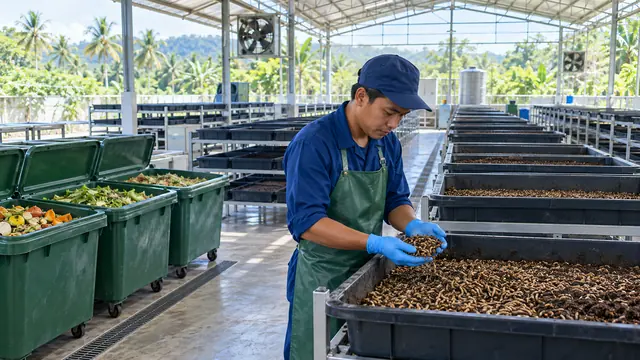
Black Soldier Fly (BSF) Bioconversion: Sustainable Insect Protein & Frass
Bioconvert municipal organic food waste and seafood processing offal into high-protein Black Soldier Fly (Hermetia illucens) larvae meal and organic bio-fertilizer for local livestock feed.
View details →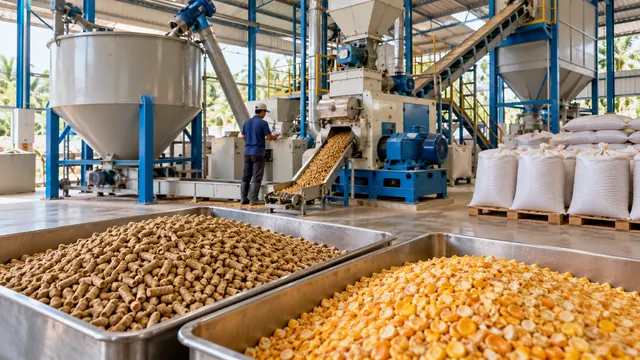
Integrated Commercial Livestock & Aquaculture Feed Manufacturing
Manufacture balanced commercial feeds for swine, cattle, poultry, and aquaculture by consolidating Timor corn, local fishmeal, and limestone with high domestic resource cost advantage.
View details →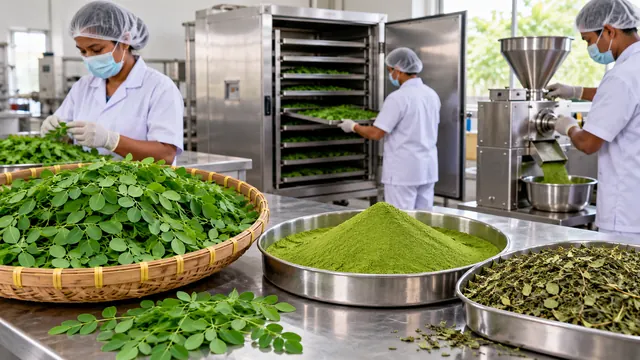
Moringa (Kelor) Industrial Processing: Superfood Powder, Tea & Seed Oil
Process NTT’s nutrient-dense Moringa oleifera leaves and seeds into pharmaceutical-grade superfood powder, herbal tea infusions, and cold-pressed cosmetic seed oil for global wellness markets.
View details →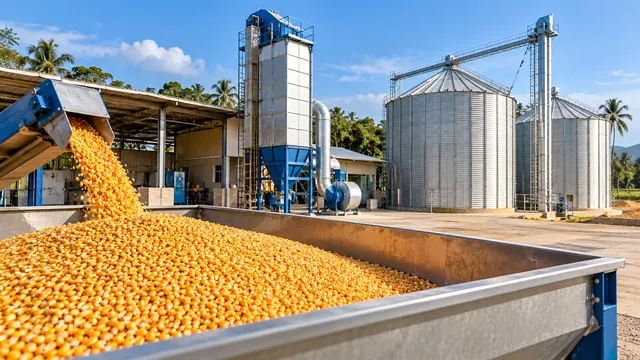
Commercial Grain Corn Drying, Silo Storage & Aggregation Depot
Establish a commercial grain receiving, continuous drying, and steel silo storage depot in KIB to consolidate Timor’s corn harvest for regional feed mills and export markets.
View details →