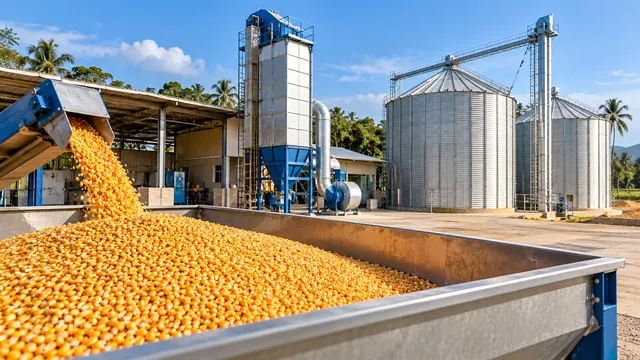
01BUSINESS OPPORTUNITY
Business Overview
East Nusa Tenggara produces substantial volumes of grain corn across South Central Timor (TTS), North Central Timor (TTU), Malaka, and Belu regencies. However, post-harvest losses routinely exceed 15% to 25% due to high harvest moisture (22%–28%), inadequate roadside sun-drying, and destructive aflatoxin mold blooms during rainy periods. Establishing a high-capacity continuous drying and bulk steel silo storage hub in KIB transforms raw damp field corn into standardized industrial feed grain (moisture < 14%, aflatoxin < 20 ppb). Locating in KIB connects grain inflows directly from the Trans-Timor highway with neighboring feed mills, inter-island shipping berths at Tenau Port, and overland export corridors to Timor-Leste.
Products & Business Formats
- Standardized Dried Yellow Feed Grain Corn (Moisture < 14%)
- Cleaned, mechanically dried, and graded yellow corn meeting National Animal Feed Standards (SNI), free of dust, cobs, and aflatoxin mold.
- Premium Food-Grade White & Yellow Polished Corn Grits
- De-germed and precision-milled corn grits for regional culinary staples, traditional snacks, and food processing ingredients.
- Corn Cob & Agricultural Residue Pellets for Bioenergy
- Densified fuel pellets produced from crushed corn cobs and husks, supplied as biomass fuel for industrial boilers and co-firing power plants.
- Grain Cleaning & Silo Storage Custody Services
- Third-party bulk grain intake, continuous drying, and climate-controlled silo storage custody for grain traders and regional feed mills.
Business model
Trading and processing margins come from buying main-harvest corn, drying and storing it as buffer stock, supplemented by regular supply contracts with feed mills and sales of corn grits/flour.
Development stages
- Stage 1 — Use ready-to-lease buildings at KIB to install grain cleaners, batch dryers, and palletised storage warehouses.
- Stage 2 — Add a corn-grits milling line, degerminators, and facilities for rapid moisture and aflatoxin testing.
- Stage 3 — Build a large-capacity corn-storage silo complex with continuous tower dryers on KIB HPL land plots.
02BUSINESS OPPORTUNITY
Market & Potential Buyers
Timor Island produces over 300,000 tonnes of grain corn annually across South Central Timor (TTS), North Central Timor (TTU), Malaka, and Belu. However, during rainy harvest periods, farmers suffer crippling 20%+ post-harvest losses because traditional sun-drying fails. Operating a continuous-flow grain drying and silo terminal inside KIB resolves this bottleneck, supplying local feed mills, inter-island trade via Tenau Port, and export corridors to Timor-Leste.
Market Demand & Potential Buyers
- Commercial swine and livestock feed manufacturing plants operating inside KIB
- Large-scale commercial feed mills in East Java (Surabaya) via empty container return backhaul shipping
- Cross-border agricultural grain traders and food import distributors in neighboring Timor-Leste
- Local commercial poultry and pig farming cooperatives across Greater Kupang
Market Evidence & Context
Major Corn Production Centers across Mainland Timor
Provincial agricultural data confirms that South Central Timor (TTS), Belu, and Malaka form the grain basket of NTT, yielding hundreds of thousands of tonnes of corn annually. Bolok Industrial Park Profile
Direct Strategic Highway Linkage via Trans-Timor Corridor
KIB is situated at the terminus of the Trans-Timor highway, enabling heavy grain tipper trucks to unload directly into intake hoppers without urban detours. Trans-Timor corridor · Reference not yet attached
Grain trading in NTT is currently dominated by informal collectors who buy wet field corn at heavy discounts and dry it crudely on tarpaulins along highway shoulders. Grain dried this way has uneven moisture (16%–20%), high dirt contamination, and elevated aflatoxin levels that cause rejection by commercial feed mills. A modern silo depot in KIB delivering certified SNI-grade grain commands premium market pricing.
03BUSINESS OPPORTUNITY
Raw Materials & Supply
Raw wet corn is aggregated directly from farming farmer groups and rural collection stations along the Trans-Timor highway corridor.
Raw material sources and requirements| Materials & Requirements | Procurement Source | Quality & Key Specifications |
|---|
| Raw Wet Grain Corn (Shell Corn on Cob or Loose Grain) | Smallholder farming cooperatives in South Central Timor, TTU, Belu, and Malaka. | Fresh harvest grain, moisture 20%–28%, free from chemical pesticide contamination. |
|---|
| Thermal Energy for Continuous Grain Dryers | Captive corn cobs, biomass pellets, or clean industrial diesel. | Clean indirect hot air heat exchangers to prevent combustion soot from contaminating food-grade grain. |
|---|
| Industrial Electrical Power for Silo Aeration & Elevators | KIB estate electrical grid with on-site backup generator. | Stable 380V three-phase power to drive heavy bucket elevators and aeration fans. |
|---|
Seasonality & Supply Continuity
Grain intake peaks between February and June during primary harvest flushes. The facility dries grain rapidly and stores it safely in silos for year-round distribution.
Collection & shipping
Wet corn is hauled via 10-to-20 tonne dump trucks along the Trans-Timor highway directly into KIB intake pits. Outbound grain is dispatched via bulk container or bagged trucks.
Procurement & handling costs
Raw grain procurement constitutes 75%–85% of total grain merchandising cash cost. Operating high-efficiency biomass-fired dryers minimizes per-tonne drying expense.
04BUSINESS OPPORTUNITY
Why Consider KIB
KIB provides the essential heavy industrial infrastructure: high-capacity power, direct Trans-Timor access, deep-water port proximity, and co-located feed mill off-takers.
- Direct Gateway to Trans-Timor Grain Highway & Border Corridor
- Enables heavy multi-axle grain tipper trucks from rural Timor farming sentras to deliver directly without being obstructed by Kupang city center bridge limits. Trans-Timor corridor · Reference not yet attached
- Immediate Captive Demand from KIB Commercial Feed Mills
- Direct inter-estate transfer of dried feed corn to neighboring feed manufacturing plants inside KIB with near-zero logistics handling costs. KIB development plan · Reference not yet attached
05BUSINESS OPPORTUNITY
Business Development Requirements
Investors can deploy a 20–30 TPH automated continuous-flow mixed-flow grain drying plant coupled with a 5,000 to 10,000-tonne galvanized steel silo battery.
Business process
- Truck intake over certified 60-tonne weighbridge, automated pneumatic probe sampling, and instant moisture/aflatoxin analysis
- Bulk unloading into underground intake hopper with heavy pre-cleaning trommel to extract stones, cobs, and dust
- Continuous drying through automated mixed-flow grain drying towers (reducing moisture from 26% down to 13.5% in a single pass)
- Transfer via enclosed bucket elevators into galvanized corrugated steel silos fitted with automated aeration and temperature monitoring cables
- Continuous grain conditioning, fumigation, and computer-controlled aeration to prevent moisture migration and pest infestation
- Gravity bottom discharge onto enclosed belt conveyors for bulk container loading or high-speed bagging into 50 kg sacks
Initial Capacity & Production Scale
- Continuous Mixed-Flow Tower Grain Dryer (20–30 TPH)
- High-capacity grain drying tower with indirect biomass/oil heat exchanger and automated moisture sensors ensuring uniform grain drying without heat stress cracks.
- Galvanized Corrugated Steel Silo Battery (5,000–10,000 Tonnes)
- Engineered grain storage silos with hopper or flat concrete bottoms, internal temperature telemetry cables, and high-volume centrifugal aeration fans.
- Heavy Pre-Cleaning & Dust Extraction Screeners
- Rotary drum scalpers, aspirator air separators, and baghouse dust collection filters to eliminate fire hazards from airborne grain dust.
- Certified Grain Quality Testing Laboratory
- On-site laboratory equipped with digital grain moisture meters, test-weight scales (hectoliter), and quantitative lateral-flow aflatoxin test readers.
Dedicated Production Facilities (Investor Scope)
60-tonne weighbridge, underground intake pit, pre-cleaning rotary separator, grain drying tower, steel storage silos, bucket elevators, automated bagging line, and QC lab.
Eliminating the 20% harvest loss of Timor corn through mechanized continuous drying and silo storage allows the operator to capture massive seasonal price spreads between harvest troughs and lean-season peaks.
06BUSINESS OPPORTUNITY
Estate Facilities Available at KIB
Bolok Industrial Park (KIB) prepares Phase I with a total area of 191 hectares under clean & clear Right of Management (HPL) land titles with flexible plot sizing, alongside ready-to-lease standard industrial warehouses. The facilities below represent the core estate infrastructure provided by KIB, while tenant-specific production machinery and specialized civil/utility works remain the investor's scope.
- Phase I (Total 191 Ha HPL) & Flexible Plot Sizing
- Clean & clear HPL land title spanning 191 hectares in Phase I, with plot boundaries customized to factory or logistics yard requirements.
- Standard Ready-to-Lease Warehouses
- Basic turn-key warehouse structures ready for storage or lightweight modular machine assembly; specialized retrofits installed by tenant.
- Paved Heavy-Duty Main Estate Roads
- Dedicated estate road network engineered for heavy truck and container maneuvers connecting to Bolok Port (3.6 km) and Tenau Port (7.9 km).
- Clean Water Grid & Distribution Reservoirs
- Industrial water distribution network backed by on-site storage reservoirs; advanced water purification (e.g., RO/UV) configured per plant.
- Estate Electrical Power Grid
- Medium-voltage power grid connections for operational loads; dedicated transformers or backup generator sets installed per plant load profile.
- Fiber Optic Telecom & Estate Street Lighting
- High-speed optical fiber connectivity, environmental street illumination, and planned green buffer zones across the estate.
Site Suitability & Building Delivery Boundaries
Heavy industrial parcels (1.5–3.0 hectares) in KIB Zone I with heavy soil-bearing capacity for tall silo batteries and dual-lane access for multi-axle grain trucks.
Prospective investors are advised to consult with the KIB management team regarding exact plot sizes, standard warehouse technical specifications, electrical power capacity, and water flow rates prior to concluding detailed feasibility studies.
The management team of PT Kawasan Industri Bolok (Perseroda) assists local, national, and international investors (Timor-Leste, Australia, China, etc.) from initial site inspection through to leasing and operational licensing.
Estate Facilities Profile ↗BUSINESS OPPORTUNITY
Risks & Considerations
Primary operational risks include seasonal corn price volatility, grain spoilage from moisture condensation in silos, and grain dust fire hazards.
- Severe aflatoxin contamination in delayed harvest corn exceeding animal feed safety thresholds (>20 ppb)
- Implement mandatory digital test kit screening at the intake gate, immediately rejecting contaminated lots before mixing into storage silos.
- Moisture condensation and grain cake formation inside metal silos during high tropical humidity
- Deploy automated computerized silo aeration systems tied to ambient dew-point sensors, running fans only during optimal weather conditions.
- Grain dust explosion hazards in elevators and enclosed conveying galleries
- Install explosion relief vents, antistatic conveyor belting, magnetic iron separators, and automated bearing temperature sensors across all conveying equipment.
08BUSINESS OPPORTUNITY
Studies & References
Data sources include Ministry of Agriculture corn production statistics for NTT, Indonesian National Feed Grain Standards (SNI 4483:2013), and KIB logistics infrastructure master plans.
Regional Data· 2026
Harvest Area and Production of Corn in NTT for 2025
BPS Statistics NTT Province· East Nusa Tenggara
Read summary
Official release by BPS NTT (March 2, 2026): NTT province produced 783.6 thousand tons of corn across 336.2 thousand hectares in 2025, with Kupang Regency generating 123.3 thousand tons across 52.8 thousand hectares, providing an abundant grain hinterland for KIB.
Accessed 2026-10-19
Research· 2020
Analysis of Aflatoxin Levels in Timor Local Corn Under Natural Air Drying Durations
Jurnal Teknik Pertanian Lampung · Universitas Lampung· Timor
Authors: Jefrianus Nino & Eduardus Y. Neonbeni
Read summary
Research on Timor local corn showed drying airflow velocity and duration directly determine aflatoxin proliferation. Mechanical drying rapidly reducing moisture content below 14% prevents contamination, demonstrating the necessity of industrial drying silos at KIB.
Accessed 2026-10-19
Regional Data· 2024
WebGIS 2023 Agricultural Census (ST2023) of East Nusa Tenggara Province
BPS - Statistics Indonesia· East Nusa Tenggara
Read summary
Geospatial census mapping across NTT documenting 674,336 food crop production units (predominantly corn), 33,891 fishery business units, and 149,000 hectares of coconut estates, quantifying the hinterland supply base for KIB.
Accessed 2026-10-19
Technology Application· 2024
Local-Raw-Material Based KUB Chicken Feed Processing Technology at P4S Afro Farm Baumata
Jurnal Pengabdian Masyarakat Peternakan · Politani Kupang· Baumata, Kupang Regency
Authors: Nalle, Helda, Sinlae, Kusumaningrum, Tabun & Vertygo
Read summary
Implementation of KUB chicken starter and grower feed production in mash, pellet, and crumble forms at P4S Afro Farm Baumata using local yellow corn and agro-industrial by-products, proving high nutritional performance from local inputs.
Accessed 2026-10-19
Research· 2022
Pig Feed Industry Competitiveness: Case Study in Kupang City, East Nusa Tenggara
International Journal of Social Science Research and Review· Kupang City
Authors: Agus A. Nalle, Thomas Lapenangga, Victor J. Ballo, Hamza H. Wulakada
Read summary
Policy Analysis Matrix (PAM) assessment of local pig feed manufacturing in Kupang, showing Private Cost Ratios (PCR) and Domestic Resource Cost Ratios (DRC) well below 1, confirming strong import-substitution competitiveness.
Technology Application· 2024
Dissemination and Transfer of Animal Feed Technology in Kupang Timur, Kupang Regency
Journal of Innovation and Applied Technology · Universitas Brawijaya· Kupang Timur, Kupang Regency
Authors: Agus Budiarto, Susinggih Wijana, Essa Noer Bhakty Mulia, Anggraeni Dwi Kusumawati, Muhammad Fhikri Yudha Pratama
Read summary
Technology transfer on ammoniated agricultural residues, silage fermentation, and total mixed ration (TMR) block compaction, overcoming dry season forage deficits for commercial feed mill formulation at KIB.
Standards & Regulations· 2026
BPOM Regulation Number 11 of 2026 on Food Contact Packaging Materials
Indonesian Food and Drug Authority (BPOM)· Indonesia
Read summary
Sets migration limits, approved polymer lists, and non-toxic plasticizer requirements for packaging coming into direct contact with food, forming the mandatory regulatory baseline for packaging and food processors in KIB.
Accessed 2026-10-19
Industrial Park & Logistics
Kupang Container Terminal Service Profile
PT Pelindo Terminal Petikemas· Tenau, Kupang
Read summary
Kupang Container Terminal at Tenau Port (7.9 km from KIB) handles dry and refrigerated container cargo (reefer plugs) with scheduled feeder connections to Surabaya, Makassar, and national shipping routes for raw materials and outbound finished products.
Accessed 2026-10-19
Industrial Park & Logistics· 2026
Road Distances from KIB Bolok to Key Port, City, and Airport Hubs
OpenStreetMap · OSRM Routing· Bolok, Tenau, Kupang City & El Tari Airport
Read summary
Calculated highway route distances from KIB Bolok: 3.6 km to Bolok ASDP Ferry Terminal, 7.9 km to Tenau Container Port, 14.5 km to central Kupang commercial district, and 25.0 km to El Tari International Airport.
Accessed 2026-10-19
Industrial Park & Logistics
Bolok Industrial Park Profile
PT Kawasan Industri Bolok (Perseroda)· Bolok, West Kupang
Read summary
Official profile of the Bolok Industrial Park (Phase I covers 191 hectares with clean & clear HPL land title, flexible lease plots, ready-to-use standard factory/warehouse units, paved primary roads, clean water reservoir system, three-phase industrial power, and fiber-optic connectivity).
Accessed 2026-10-19
Reference not yet attached
Trans-Timor corridor
This material mentions the following reference, but its document and source link have not been attached. The reference cannot yet be checked.
Reference not yet attached
KIB development plan
This material mentions the following reference, but its document and source link have not been attached. The reference cannot yet be checked.
BUSINESS OPPORTUNITY
Next Steps
Interested in developing this business at KIB?
Submit target silo storage capacity (tonnes) and dryer throughput specifications to KIB management to finalize industrial parcel leasing.
Discuss your business plan ↗ Complete your business supply chain
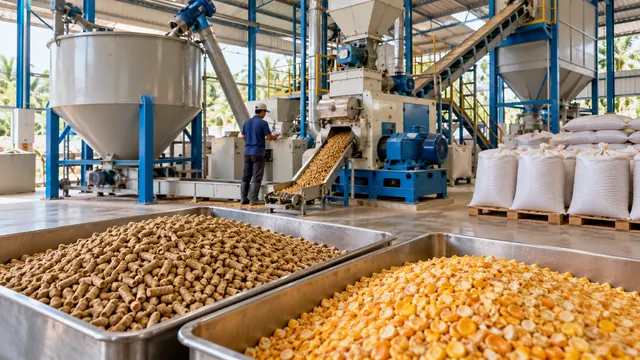
Integrated Commercial Livestock & Aquaculture Feed Manufacturing
Manufacture balanced commercial feeds for swine, cattle, poultry, and aquaculture by consolidating Timor corn, local fishmeal, and limestone with high domestic resource cost advantage.
View details →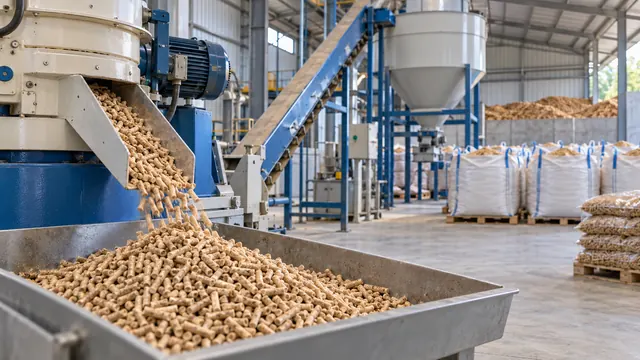
Biomass Wood Pellet & Agricultural Residue Fuel Processing
Produce high-density biomass wood pellets from fast-growing energy timber (Gamal, Calliandra) and dry crop residues to supply co-firing power plants and regional industrial boilers.
View details →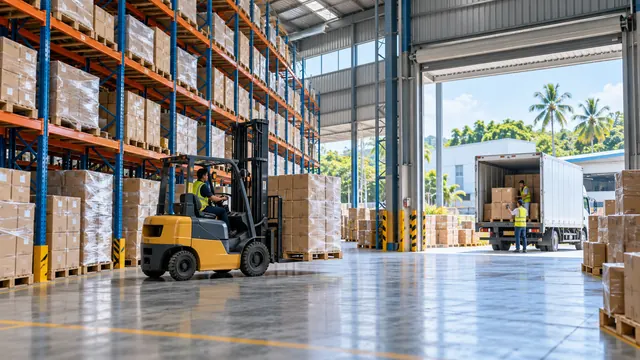
Consolidation Logistics Warehouse & Cross-Border Distribution Depot
Modern covered logistics warehouse and container cross-dock facility supporting inter-island retail distribution, project cargo staging, and cross-border trade into Timor-Leste.
View details →
Food-Grade Flexible Packaging, Vacuum Bags & Retort Pouch Converting
High-barrier multi-layer flexible packaging, three-side seal vacuum bags, and retort pouches manufacturing facility supplying seafood, meat, and agro-processing industries in KIB and across NTT.
View details →